Education and Dyslexia

I asked on a home schooling dyslexic forum what they wanted educators to know about their children’s struggles. The response was overwhelming.
One parent talked of the lack of understanding that a dyslexic’s brain is wired differently and that it’s a good thing! It gives them great advantages to be able to think outside the box, but the trade-off is that language is harder to grasp. There is great concern regarding the ability of school’s to correctly diagnose dyslexia. One mum asked every year from kindy to Grade 4 whether her child might have dyslexia. The answer was always “no,” and he was never tested. Private testing confirmed he was. He has now been home schooled for five years and has no belief in himself, and sadly has a massive resistance to learning. He was one of six children in his year who weren’t diagnosed at school.

Another mum said that her child started having anxiety and low confidence. She is now home schooling and has happily discovered that there is a lot less stress. Her seven-year old son has many strengths, but at school he was constantly told what he couldn’t do. One lady mentioned that her mother fought the fight with dyslexia 50 years ago. Her husband’s aunt, 45 years ago, and her MIL 40 years prior. This lady suffered throughout school 20 years ago. “Its getting worse instead of better…and still they do nothing.” One mum stated that there are “accusations of laziness and lack of effort of child. Very little actual positive help. Little understanding of dyslexia and the anxiety it produces. I am now home schooling due to dyslexia and anxiety-anxiety greatly worsened by a system unwilling to understand or help, just blame.”

Another lady said, “isn’t it fascinating how curious they are? My kids are all clever in their own ways, but it is my dyslexic girl who is the most curious…Always asking why? How? What?Where? That’s why home schooling is working for her…She is always exploring and searching for information on any number of topics. ” One mum said, “I had my son’s teacher tell me that I never read books to him.”

Tara said, “Schools should know that more time without explicit MSL instruction or doing still more of what doesn’t work will not get a different result. It will create learned helplessness. That all their collective experiences don’t add to squat in relation to my child if they haven’t ever researched and successfully transitioned a dyslexic child from non-reader to reader. A child is always doing the best that they can and if they are not fully participating, that is a flag that there is support needed.”

This from a student teacher, “This is my fourth year of a B.Ed Primary. I struggled at school, but always wanted to be a teacher. I found that I learned better at TAFE than at Uni. Why? Because it is hands on. First year of Uni, I discovered that I have mild dyslexia and dysgraphia. Finally I knew why I had struggled. However, I feel Uni and especially schools (as I do pracs each year), do not comprehend what dyslexia is and how a dyslexic person learns!”
I loved this encouraging post from Homeschooling Downunder

I will end with one of my heroines, Jackie French

Homeschooling and Dyslexia

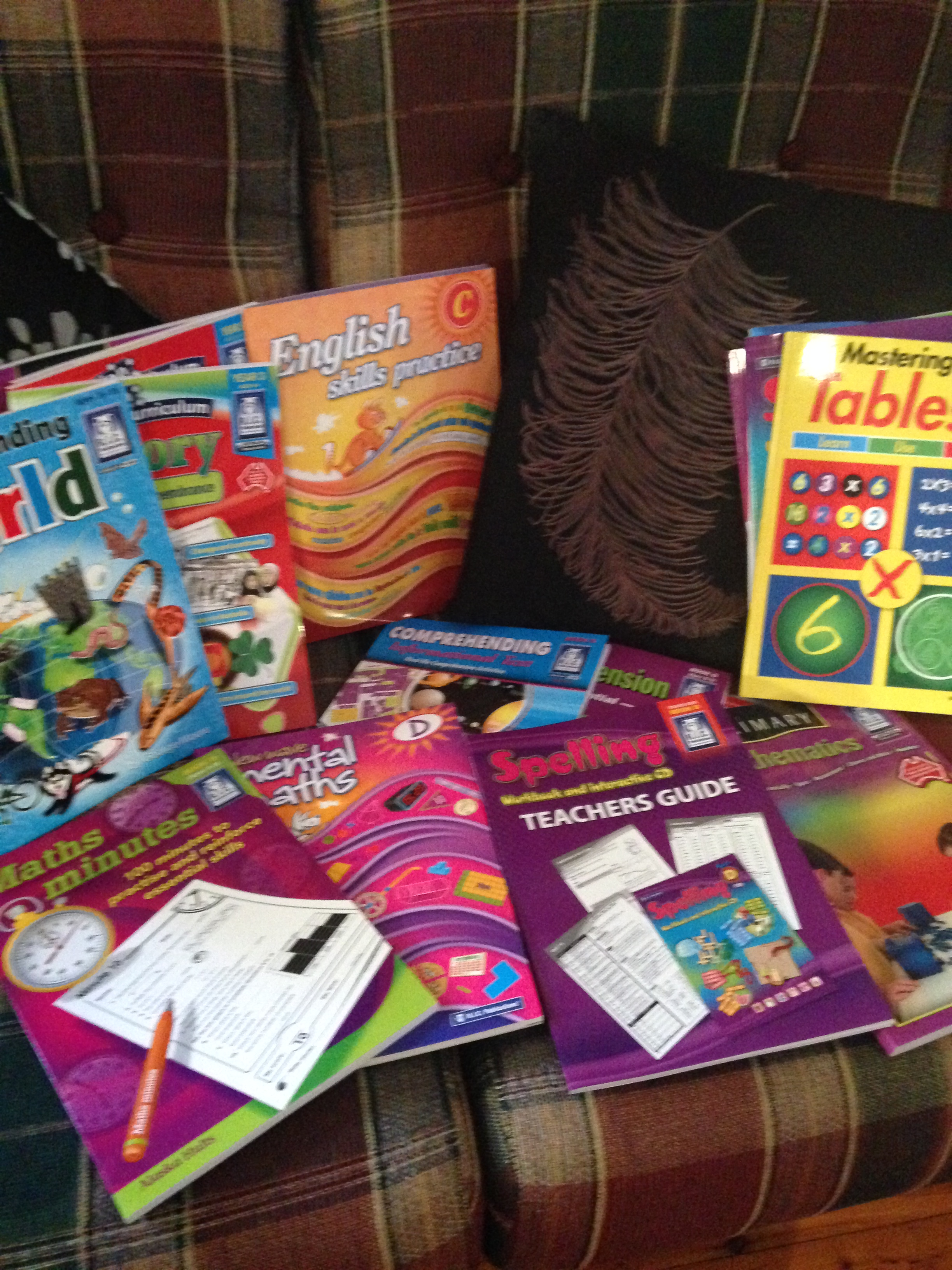
The day the resources arrived. The little girl was so excited!

The mother would never forget the moment she realized our education system had few resources for dyslexic kids. She was talking to the teacher, her daughter outside, swinging her little legs to and fro. “Did I do okay Mummy? Are you proud of me?” Her mother smiled and replied that she was very proud of her, and that she had done very well. She could see the big picture, as parents are privy to. She could see her daughter being broken and scarred by the labels already stuck onto her skin, like a crude tattoo. If a child with dyslexia isn’t given adequate assistance by the time they reach adolescence, their view of themselves can be tragically aligned to their ability to learn within a system that won’t cater to them.

The mother enlisted the private tutor, and along the way, found another remarkable mentor. Elizabeth was an art teacher within the education department for a very long time. She resigned, and went into private practice, using a variety of modalities. She asked the mother to observe where the daughter’s eyes travelled when asked a question. “To the left,” her mother replied. Elizabeth explained that the little girl began to process information from the upper left of her eyes. “Does she have difficulty copying notes off the board, and does she have messy handwriting?” “Yes,” the mother replied. “She is having trouble coordinating what her eyes are seeing with her body movements. Reading off a board or piece of paper in front of her is bound to fail.” She put a coloured piece of paper-a complex word written on it- to the left of the child’s vision, and the child sighted it. Elizabeth then turned it over and asked the child to say the word. Not only could she say it, but she spelt it backwards and forwards! How can you adequately thank people who are giving a child the gift of self-esteem, dignity and a passion for learning? Elizabeth gave the mother exercises to do with the child at home. Even crawling around the floor would help.

The mother knew what she had to do. She studied the curriculum and designated outcomes for her daughter’s year, and developed a lesson plan, using resources and tutors she had uncovered. A home schooling mum she was blessed to befriend helped her. The education department came out and interviewed both her and her daughter, and she was given the go-ahead. Her registration came through toward the end of last year, and then it became real. She was terrified. Frightened of failing her daughter, of the enormity of the task ahead. She had to do it. Local schools weren’t equipped to accommodate dyslexic students. The competition started early, being judged by their class on their ability to write out their own speeches, then recite them publicly. After a month of home-schooling, her mother can already see the benefits. The child speaks with ease amongst adults and children alike. Her self-esteem has been lifted, and she is eager to learn. She often gets to her workbooks before her mother in the mornings. When she is stuck on a sentence, her mother is right there, to read it out. Able to learn on her terms, and in her own time. She has a full social life, to the extent that a day at home with just her mother is factored in. Rather than witnessing the reducing of a child, her mother is watching her grow.

Once Upon a Time… A Dyslexic’s Tale

photo (4)

Once upon a time, there lived a little girl. She created stories in her head, and regaled the class with her imagery and passion when relaying the tales. She found writing frustrating, and often wrote words backwards. She couldn’t spell. She fumbled along, until a private high school deemed her intolerably stupid; irretrievably incapable. She was broken by fourteen. She knew she was intelligent, not least because of all the dragons she outwitted, laying in wait along her path. At fifteen she resumed school via distance education. Able to learn in her own time, she excelled. She could look up words, and go over her writing until she felt it was right. She went on to write books, and edit other people’s essays. It made her angry, that people had labelled her and deemed her to be unteachable.

The years passed, and she went on to have a daughter. Determined to do all the right things, she ate well whilst pregnant, and offered her unborn a plethora of baby literature. By the time her daughter drew her first breath, her mother had a library of children’s books waiting for her. She read to her day and night, and her daughter loved the puppets and actions her mother performed to go along with the story. Her mother took her to the Opera House regularly, as well as the Sydney Theatre at Walsh Bay to see those books come to life. This child was so active, and so very curious, her mother felt assured that she would have no trouble when she started school.


It became clear early in kindergarten that this child was struggling. She wasn’t “getting” her phonic words, and was struggling to read whilst other children soared through the levels. Prescribed glasses were not to be the answer her mother had hoped. Alone and concerned, her mother sought the help of a private speech therapist. Dyslexia was suggested. Comprehensive testing occurred at the start of Year One, and it was confirmed. Her daughter’s language skills were above 95% of her peers, thus she had advanced language skills for her age. Her auditory memory was also excellent. The brain just had difficulty deciphering the information the eye was receiving. Her daughter’s self-esteem plummeted. She was offered a place on Reading Recovery, but it came to an end after a few weeks. School days were represented by frustration, and a weariness descended on her daughter. She had double the work of other children as she needed to complete set work from the speech pathologist as well. Headaches commonly came upon her. Her mother didn’t make her write out Christmas cards, as it proved too tiring. She would stand near her and whisper what a sign said when they were out together with other kids on outings and excursions.

Year Two began with the teacher remarking that they couldn’t help a dyslexic child. She said this child would always struggle at school, and would have a hard time with all sound words. She said she would get a job of some description later in life, as she had an agreeable personality. When the possibility of home schooling was mentioned, it was dismissed. The mother must keep her at school for the social aspect. The child had another assessment, and the results were marked dyslexia. The report insisted that the school and this centre must work together to support the child. The mother researched on her own, a lonely and frightening responsibility descending on her shoulders. She found an excellent program, her daughter eagerly rising each Saturday morning in anticipation. At her first assessment, the little girl cried, feeling exposed. The tutor was so very compassionate, having had over twenty years experience as a teacher. The mother and tutor had to start back at kindergarten level to teach her the basics. The child was so tired. Triple the workload of other kids. Sometimes she cried from the frustration. Sometimes her mother did as well. She worked so hard. The teacher approached the mother. She said the girl was doing extremely well with her reading and writing. She was beyond a basic level, but indicated that in her report she would mark her on the bottom rung so her third grade teacher would have no expectations of her. “No!” her mother screamed inside her head, “I want everyone to see who she is, without labels. This child was born to soar!” History repeating itself. This mother would be damned if she was going to let that happen…
photo (5)